
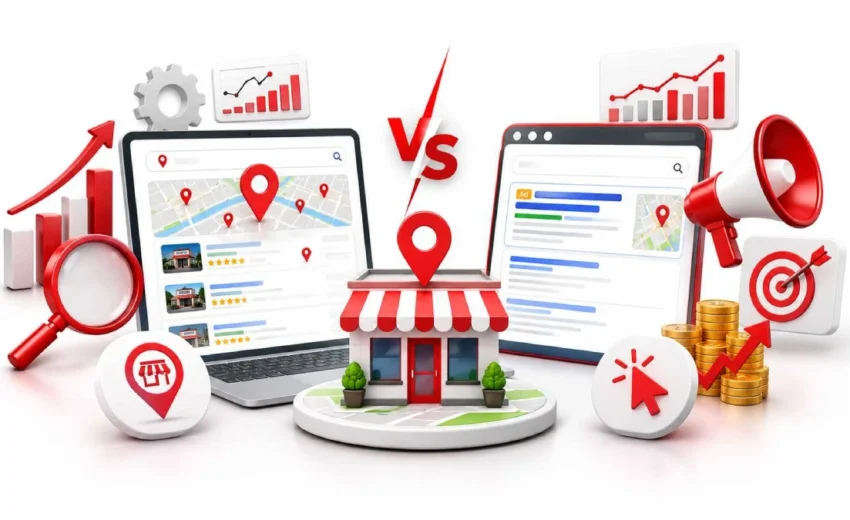
Local SEO vs PPC comes down to one number most owners never hear. Google Ads needs about $1,000 a month before its bidding works properly. Spend $400 and you are lighting money on fire.
Most owners learn this the hard way. You try ads, burn through cash in three weeks, then switch to SEO. Four months later, still nothing. Every article says “use both,” which helps nobody choosing between rent and rankings. So you keep guessing, and competitors keep taking the calls.
This guide answers the question with actual numbers. You will see real monthly costs for each, honest timelines, and which trades favour ads over rankings. You will also learn the reach limit nobody mentions, and how to track which channel brings customers.
Key Points:
- PPC delivers leads in 1 to 7 days. Local SEO takes 3 to 6 months but keeps working after you stop paying.
- Google Ads needs about $1,000 a month to function. Below that, local SEO is your only real option.
- Local SEO ties you to your address. PPC lets you target any zip code, which most guides never mention.
- Emergency trades like plumbing, HVAC, and locksmiths win with paid ads. Dentists, accountants, and salons win with local SEO.
- Pause PPC and traffic stops that day. Pause local SEO and rankings hold 2 to 12 months before fading.
- Most businesses cannot compare the two because they never track phone calls by channel.
What Local SEO and PPC Actually Are
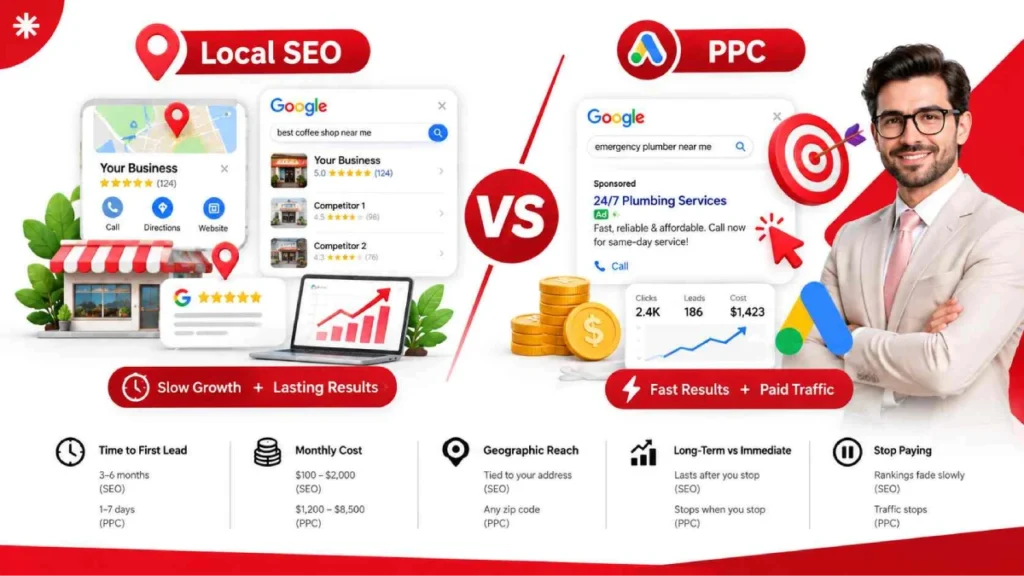
Local SEO earns your spot in search results. PPC buys it. That one line settles most of the local seo vs ppc confusion. Local SEO gets you into Google’s Local 3-Pack, Google Maps, and nearby organic results. Your Google Business Profile drives it, and Google charges nothing to create one.
PPC works the opposite way. You bid on searches like “roof repair Chicago” or “24 hour locksmith,” and Google charges you per click.The average conversion rate for Google Ads in 2022 is 7.26% and average cost per click in Google Ads in 2022 is $2.96.. Your ad can go live within 48 hours. Local SEO usually takes months.
Local SEO vs PPC at a Glance
PPC wins on speed and reach. Local SEO wins on cost per lead and staying power. PPC brings leads in 1 to 7 days. Local SEO takes 3 to 6 months, then keeps working after you stop paying. That trade-off decides most of the local seo vs ppc questions.
| What you’re comparing | Local SEO | PPC (Google Ads) |
| Time to first lead | 3 to 6 months | 1 to 7 days |
| Platform fee to Google | $0 | Charged per click |
| If you pause spending | Rankings hold, then fade slowly | Traffic stops the same day |
| Geographic reach | Tied to your physical address | Any zip code you choose |
| Cost direction over time | Falls as rankings mature | Flat or rising |
| What you control | Very little | Budget, radius, hours, keywords |
Notice what the table leaves out: one clean cost-per-lead number. WordStream and LocaliQ studied over 16,000 campaigns and landed on a $70.11 average, but that blends every industry into one figure. Your trade decides your real number, not the average. Geographic reach is the row most guides skip entirely. Local SEO ranks you near your address, while a suburban plumber can run PPC downtown all day.
Cost: What You Actually Pay for Each
Local SEO costs $100 to $2,000 a month in work. PPC costs $1,200 to $8,500 a month in ad spend, plus fees. Google charges nothing for a Business Profile, which is where the “SEO is free” myth starts. With local SEO you pay people, tools like Moz Local and BrightLocal, and your own time. With PPC you pay Google for every click.The average click costs $5.26, though legal services average $8.58 and restaurants $2.85.
One number settles the local seo vs ppc call for small budgets. Google Ads needs roughly $1,000 a month before its bidding works properly. A $300 budget buys about 40 clicks in plumbing or HVAC, and Google learns nothing from that. Below $1,000, PPC is not really an option. Local SEO is.
Cost: What You Actually Pay for Each
Local SEO costs $100 to $2,000 a month. PPC costs $1,200 to $8,500 in ad spend, plus $400 to $2,500 in management. Google charges nothing for a Business Profile, which is where the “SEO is free” myth starts. Local SEO still costs tools like Moz Local and BrightLocal, plus retainers or your own hours.
One threshold settles the local seo vs ppc question for small budgets. Google Ads needs about $1,000 a month before its bidding works. A $300 budget buys roughly 40 clicks in plumbing or HVAC. No algorithm learns from 40 clicks. Below $1,000, local SEO is the only real option.
How to Decide for Your Business
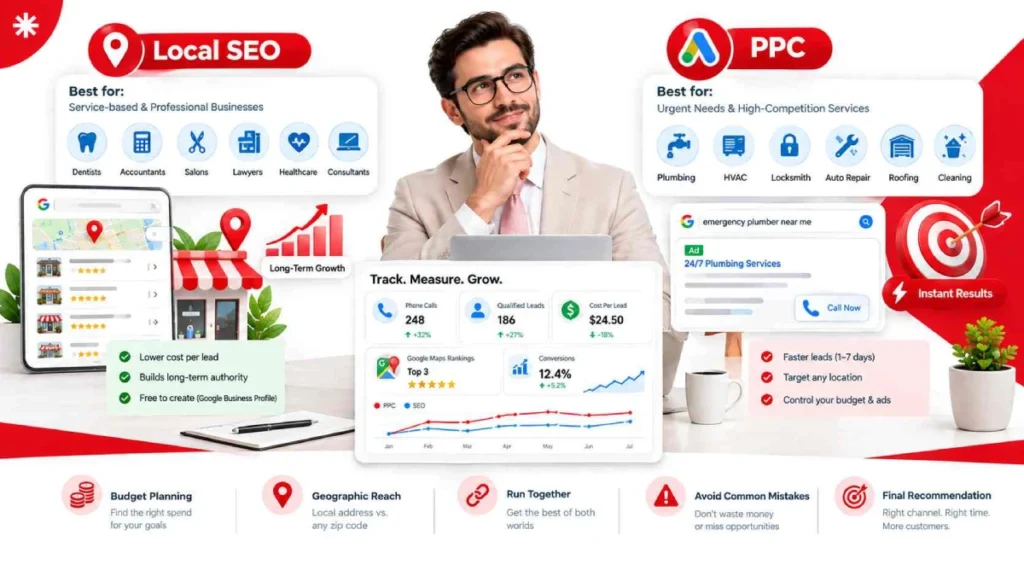
Two questions settle it: how urgent is your customer, and how much can you spend? Urgent jobs like burst pipes, lockouts, and broken heaters go to whoever sits at the top of the screen. That favours paid ads. Slower decisions like picking a dentist or accountant get researched first, and research favours local SEO.
Budget then narrows it further. The local seo vs ppc choice mostly disappears once you know your monthly number. Under $1,000, local SEO is the only workable path. Above $1,500, you can run both.
What Happens If You Stop
Pause PPC and your traffic stops that same day. Pause local SEO and your rankings hold for months, then slowly slide. Google Ads runs on a live auction. The moment your budget hits zero, you leave the auction. Years of ad spend leave nothing behind, not one ranking.
Local SEO decays instead of dying. Your reviews, citations on Yelp and Bing Places, and location pages stay indexed. Expect 2 to 3 months of hold in busy markets, and 6 to 12 in quiet ones. Competitors collecting fresh reviews will eventually pass you, so neither channel is truly permanent.
How to Run Both Together
Run PPC for leads today, and let its data pick your SEO targets for next year. Pull your Google Ads search terms report next to Google Search Console. Pause ads on keywords where you already hold the top three organic spots. Keep them running on positions four and below, then move that saved budget into gaps.
One setup detail protects your rankings. Static tracking numbers scattered across directories like Yelp and Bing Places break your NAP consistency. Dynamic Number Insertion fixes it. The script swaps numbers only for paid visitors, while Googlebot still reads your real number in the page source.
How to Measure Which One Is Working
Track cost per lead and customer acquisition cost per channel, not clicks or rankings. Divide total spend by qualified leads for each side. Most local businesses cannot answer the local seo vs ppc question because they never track phone calls. Tools like CallRail push call data into Google Analytics 4 and Google Ads automatically.
Two settings keep the numbers honest. Filter for first-time callers only, so existing customers checking appointments do not inflate your conversions. Then use grid trackers like Local Falcon or BrightLocal to see your real Map Pack radius, street by street.
Common Mistakes That Waste Money
Most wasted budget comes from setup errors, not from picking the wrong channel. Fix these first, before you move a single dollar between local SEO and PPC.
PPC mistakes
- Running broad match keywords without a negative list.
- Leaving Google’s default location setting on, which targets people merely searching about your city.
- Sending paid clicks to your homepage instead of a dedicated landing page.
- Killing a campaign after 10 days, before it collects enough conversion data.
Local SEO mistakes
- Putting tracking numbers in directories like Yelp, Bing Places, and Apple Maps, which breaks NAP consistency.
- Publishing 50 near-identical location pages with only the city name swapped.
- Collecting 20 reviews in one week, then nothing for six months.
- Polishing the website while the Google Business Profile sits half empty.
Mistakes that hurt both
- Judging results on impressions and rankings instead of leads.
- Letting calls go to voicemail, which also drops your Local Service Ads position.
- Expecting local SEO to show results in 30 days.
- Comparing your cost per lead to a national average instead of your own job value.
FAQS
Is local SEO better than PPC for small businesses?
Local SEO is better for long-term lead costs, while PPC is better for immediate leads. Local SEO takes three to six months but keeps working after you stop paying, whereas PPC delivers within a week and stops when your budget ends.
Can I run local SEO and PPC at the same time?
Yes, if your monthly budget exceeds $1,500. Below that, splitting funds starves both channels, since Google Ads needs roughly $1,000 in monthly spend before its bidding works.
What happens if I stop paying for PPC?
Your traffic drops off the same day. Google Ads runs on a live auction, so pausing your budget removes you immediately with no residual visibility.
What can I do with only $500 a month?
Put the entire amount into local SEO. A $500 ad budget buys roughly 60 clicks in trades like plumbing or HVAC, which is too little data for Google’s bidding to optimize.
Does bidding on keywords I already rank for waste money?
Usually yes, when you hold the top three organic positions. Pause those ads and move the budget toward keywords where you rank fourth or lower.
Is local SEO still worth it with AI Overviews on Google?
Yes, because the Local Pack and Google Maps still drive local discovery even when AI summaries appear above them. Local searches carry strong purchase intent, and Google keeps surfacing nearby businesses.
How do I measure which channel brings in customers?
Divide total channel spend by qualified leads to get cost per lead for each. Track calls by source and filter for first-time callers, so existing customers do not inflate your numbers.
Conclusion:
Neither channel wins outright. PPC buys visibility today and reaches any zip code, delivering leads within a week. Local SEO takes three to six months, costs less per lead, and keeps working after you stop paying. The budget decides most of it. Below $1,000 a month, PPC never gathers enough data, so local SEO is your only real option.
Your customer decides the rest. Emergency trades like plumbing, HVAC, and locksmiths belong in paid ads, because nobody compares options with a flooded basement. Dentists, accountants, and salons earn more from organic rankings. Either way, track your calls and measure cost per lead by channel, or you are guessing.
Book a free local search review and find out where your budget belongs.

9 September 2026
Local SEO vs SEO: Key Differences Explained

9 September 2026