
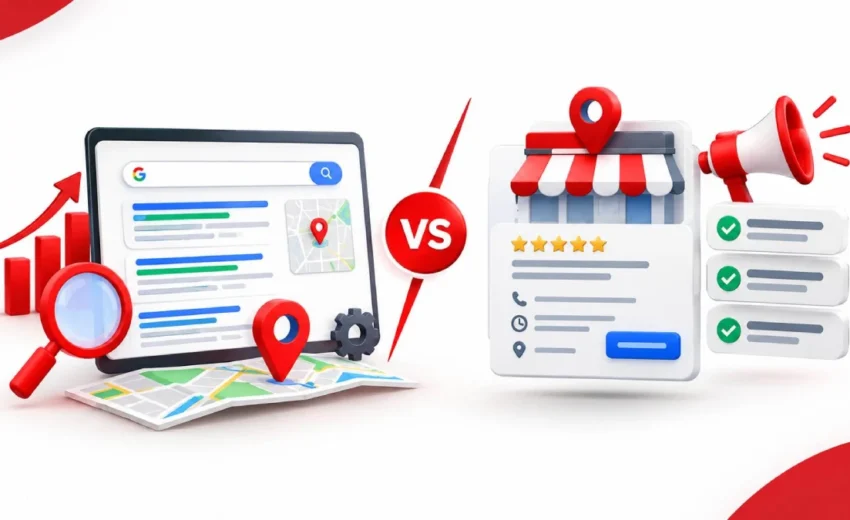
Pause your local service ads on Friday. By Monday, your phone stops ringing. That’s the difference between paying for visibility and building an asset you own. The stakes are high, because Google reports that 76% of people who search for something nearby visit a business within 24 hours.
Yet most owners spend months on ads or SEO without knowing which one books jobs. Then lead costs rise, or rankings slip, and the money is already gone. Worse, most advice online still describes badges Google scrapped last year.
This article gives you the real comparison. You will learn what each channel charges, how Google ranks you in both, and how to work out your cost per booked job. We also cover two recent changes that affect every advertiser.
Key Points:
- Local service ads charge per lead and bring calls in days, but only if your trade, country, and paperwork qualify.
- Organic local SEO costs labour instead of media spend and usually takes 3 to 9 months to hold.
- Cost per booked job decides which channel wins, not cost per lead. A $40 lead costs $100 per job at 40% close rate and $200 at 20%.
- Reviews are the only signal that lifts both your ad ranking and your map pack position.
- Google replaced Google Guaranteed and Google Screened with one Google Verified badge in October 2025, and dropped the money-back guarantee.
- Local service ads are moving into Google Ads through 2027. Export your historical reports before your account migrates.
- Running ads without organic leaves you exposed. Pause the budget and your leads stop the same day.
What Local Service Ads Are?
Google Local Services Ads are pay-per-lead ads that sit at the very top of Google search results. They appear above regular Google Ads and above the map pack. Google built them for service businesses like plumbers, electricians, roofers, and lawyers.
You pay per lead, not per click. Someone can open your profile, read your reviews, and leave without contacting you. That costs you nothing. You get charged only when a customer calls, messages, or books through the ad.
Who Can Actually Run Them
Google decides who gets in, and most businesses do not. Three gates stand between you and a live ad.
- Your trade. Google covers most home and storefront services, from plumbing and HVAC to electrical, appliance repair, house cleaning, lawn care, roofing, pest control, and moving. A few professional categories make the list too, mainly lawyers, realtors, and financial planners. Google excludes retail shops, restaurants, and B2B companies.
- Your country. Coverage spans North America plus a group of European markets, among them the UK, Germany, France, Spain, Italy, Ireland, and the Netherlands. Trade outside those areas and the option never appears.
- Your paperwork. Expect a background check on the owner, and often on the crew too. You will also need a current trade license, general liability cover, and a Google Business Profile connected to the account.
Here the part owners learn the hard way. That approval expires. Insurance renews yearly and licenses lapse. When a document goes stale, your ad stops until you upload a fresh copy. So set a reminder 30 days before each renewal.
What Organic Local SEO Is?
Organic local SEO is the work that ranks you in Google’s map pack and local results without paying for ads. The map pack is the block of three businesses shown with a map. Below it sit the regular blue links. You pay nothing to appear in either.
Four things drive it: your Google Business Profile, steady reviews, consistent listings on sites like Yelp, Apple Maps, and Bing Places, and service pages on your website. Nothing here switches on overnight. Most businesses wait 3 to 9 months before rankings hold. But once they do, the calls keep coming without a charge per lead.
One detail owners miss: local SEO and general organic SEO are different jobs. The map pack leans on profile signals like categories and proximity. Blue links lean on page content and links.
The Key Differences at a Glance
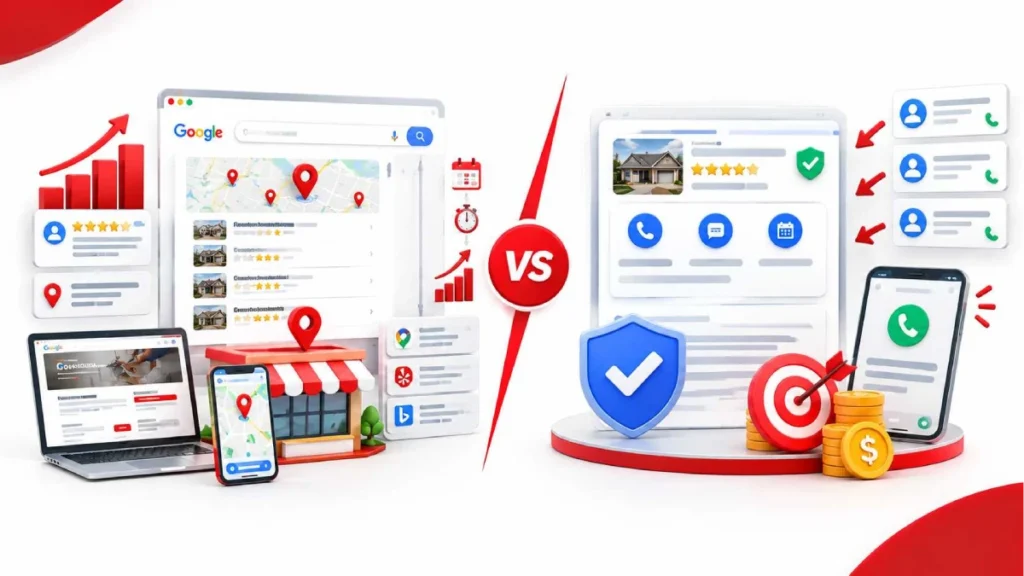
The biggest difference is simple: one costs money per lead, the other costs time. Local service ads bring calls within days. Organic local SEO builds visibility you keep, but it takes months to arrive.
| Local Service Ads | Organic Local SEO | |
| Where it shows | Very top of Search and Maps | Map pack and blue links |
| What you pay for | Each valid call, message, or booking | No fee to Google, but time and labour |
| Speed | Days, once verified | Usually 3 to 9 months |
| Who can use it | Approved categories and countries only | Any local business |
| Trust signal | Google Verified badge | Reviews and local reputation |
| If you stop | Leads stop the same day | Rankings fade slowly |
Two rows deserve a closer look.
Eligibility is a hard gate. If Google does not cover your trade or country, the paid option disappears entirely. Organic stays open to everyone.The shut-off point is where owners get hurt. Pause your ad budget on Friday and the phone goes quiet by Monday. Meanwhile, a ranking built over a year does not vanish that fast.
What Each One Actually Costs
Cost per lead is a vanity number. Cost per booked job is the real one. A $30 lead is expensive if you close one in ten. A $90 lead is cheap if you close half.
Most owners compare ad spend against an SEO retainer and stop there. That leaves out your close rate on one side and your own labour on the other.
Your Cost Per Booked Job From Local Service Ads
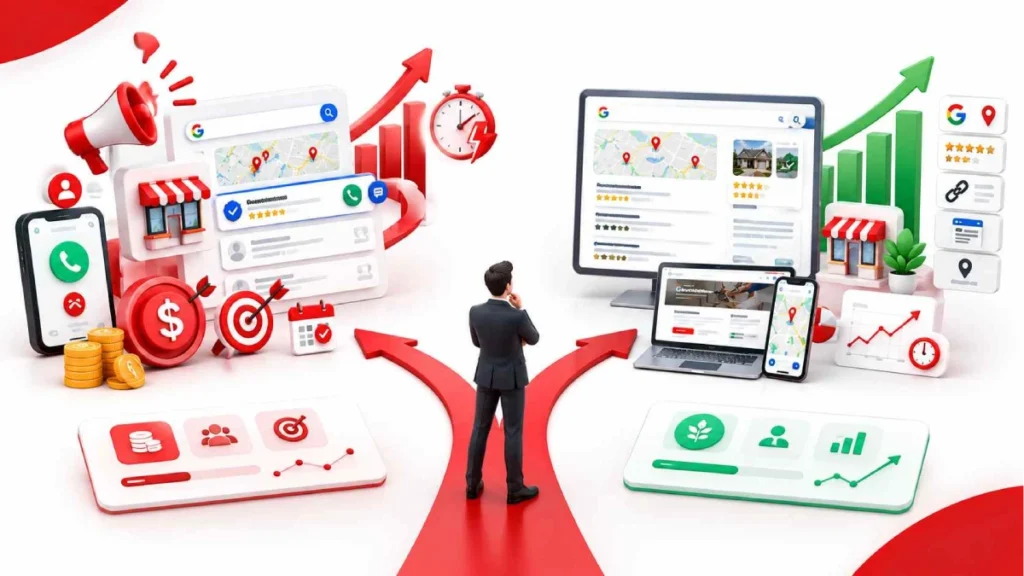
Divide your lead cost by your close rate. Here is the same $40 lead at three close rates:
| Close rate | Cost per booked job |
| 20% | $200 |
| 40% | $100 |
| 60% | $67 |
So how you answer the phone moves this number more than your budget does. Prices swing by trade and city, so check your own market. And plan for wrong-area calls, because credits are not guaranteed.
Your Cost Per Booked Job From Organic
Google charges nothing per call, but organic still costs money. It goes into agency fees, content, website fixes, and chasing reviews.
Run the same sum. Spend $1,000 a month, book 10 jobs, and that is $100 per job. The gap opens later: ad costs stay flat per lead forever, while organic costs hold steady as your calls grow. Expect little movement for 3 to 6 months.
What Each Channel Can’t Do for You
Neither channel does everything, and the gaps sit on opposite ends. Local service ads stop the day your budget stops, leaving nothing behind. They also cannot rank you for research searches like “how much does a new boiler cost.” Organic works the other way. It cannot fill an empty calendar this week, and it fades if you stop while competitors keep earning reviews.
They share one gap too. Neither one books the job for you. Both hand you a contact and stop there. Most customers call two or three businesses at once, so the first to answer usually wins. Miss the call and you paid for a lead that closed elsewhere.
Which One Should You Start With?
Start with local service ads if you need work booked in the next 30 days. That fits new businesses, new service areas, and trades with urgent demand like plumbing, locksmiths, and emergency HVAC. You get calls quickly, provided your category qualifies.
Start with organic if you have 6 to 12 months and a tight monthly budget. It also suits repeat-work businesses like cleaning, lawn care, and pest control, where customers compare options before choosing. And if your industry is not eligible, organic is your only route anyway.
Fix your call handling first if you are missing calls. Neither channel helps a business that answers on Tuesday. More leads only make that problem more expensive.
Running Both Without Wasting Money
Running both only pays off if you can tell the two apart in your numbers. Otherwise you are guessing which channel earned the job, and you cut the wrong budget six months later.
Set up tracking before you scale either one:
- Use a separate tracking number for your website, so those calls are never counted as ad leads.
- Tag every job in your CRM by source at the moment you book it, not later.
- Ask new customers how they found you, but keep the tracked source as your record.
- Check your branded searches monthly, since ads often push people to search your name.
The payoff is real. When someone searches your service, you can show in the ad block and the map pack at once. That double placement lifts your share of clicks.
One warning though. Many customers see your local service ads first, then search your business name and click the organic listing. Last-click reports credit organic and hide what the ad did. So check branded search volume before you call the ads a failure.
FAQs
Do local service ads help my organic SEO rankings?
No, Local service ads run on a separate system and give you no ranking advantage in the map pack or organic results.
How Is Local SEO Different From Organic SEO?
Local SEO targets the map pack and location-based searches, while organic SEO targets standard blue-link results. Local SEO leans on your Google Business Profile, and organic SEO leans on website content and backlinks.
Can I run local service ads without doing any SEO?
Yes, provided your category and country qualify. The risk is dependency, since your lead flow ends the day your budget stops.
How long does verification take for local service ads?
Verification can take anywhere from a few days to two weeks. Expired licenses or insurance documents are the most common cause of delay.
What happens if my category is not eligible for local service ads?
Organic local SEO becomes your only route to the top of local search. Regular Google Ads may still be available even when local service ads are not.
How do I know which channel generated a booking?
Use a separate call tracking number for your website and tag every job by source when you book it. Ad leads appear in your lead inbox, while organic calls come through your profile or website.
Are local service ads worth it for a small business?
They are worth it when your close rate is strong and your category qualifies. Cost per booked job decides the outcome, not cost per lead.
Will local service ads still exist after the move into Google Ads?
Yes, The product is relocating, not closing, and it keeps pay-per-lead billing on Search and Maps.
What should I do before my account migrates to Google Ads?
Export your historical performance reports, because they do not transfer. Google gives roughly two weeks of notice before your migration date.
Conclusion:
Local service ads buy you speed while organic local SEO builds something you keep. Ads charge per lead and can bring calls within days, but only if your trade, country, and paperwork qualify. Organic takes 3 to 9 months and costs labour instead of media spend. Neither wins on lead volume alone, since your cost per booked job and your close rate decide the real result.
Reviews are where the two meet, so a strong Google Business Profile lifts your ad ranking and your map pack position together. Also act on the recent changes: update any old “Google Guaranteed” wording, and export your reports once Google flags your migration date.If you need new jobs this month, start with ads. If you are building for the long run, start with organic.
Get a free local visibility review, and we will show you where your next dollar
11 September 2026