

Google’s Search Generative Experience has quietly rewritten the rules for organic traffic — and not everyone is losing equally. Some websites have barely noticed the shift. Others have watched their traffic fall off a cliff. The difference almost always comes down to what kind of content they publish and what kind of questions their audience asks.
This guide breaks down why certain niches take a harder hit from SGE than others, what’s actually driving those losses, and what you can do to protect your visibility before the damage compounds.
What Is SGE and How Does It Change Search?
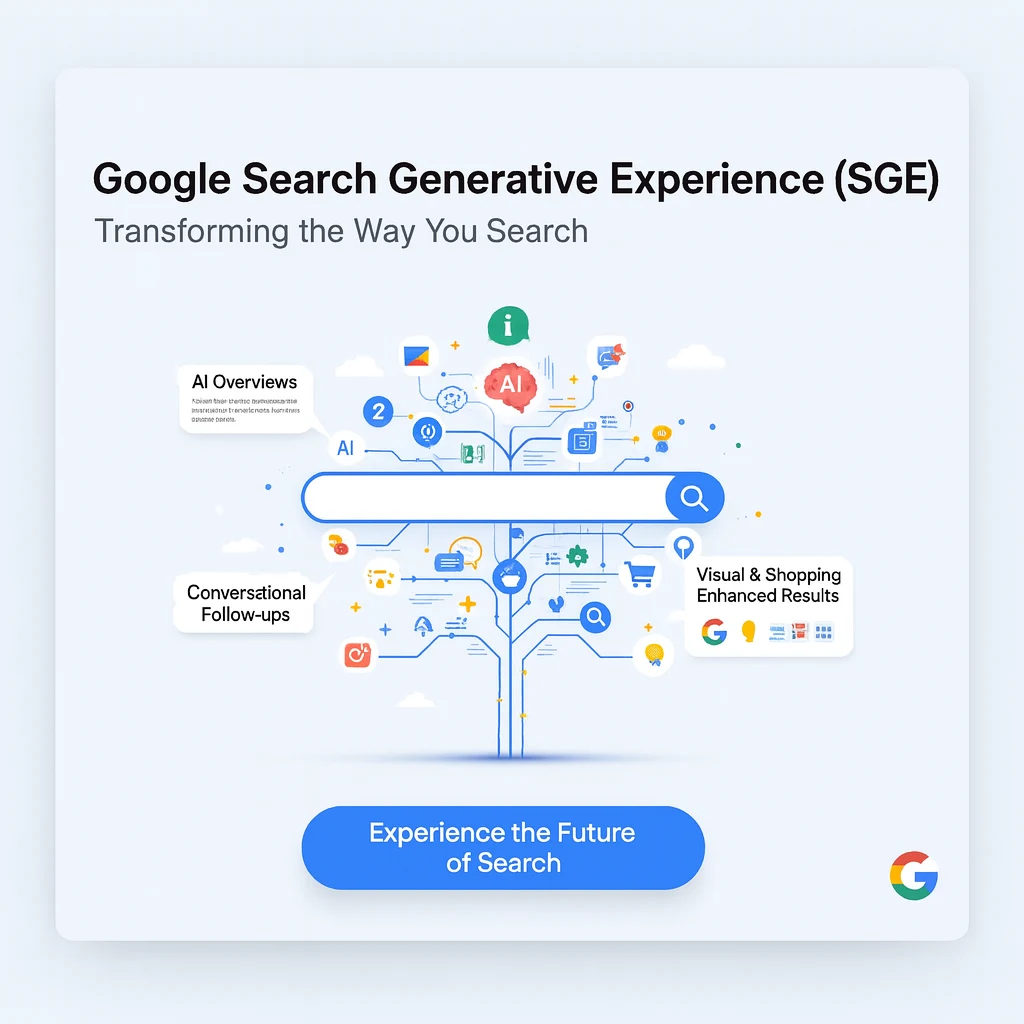
SGE, or Search Generative Experience, is Google’s AI-powered answer layer that appears at the top of search results. Instead of showing a list of links and letting users choose where to click, it generates a summary response directly on the results page. Users get what they’re looking for without ever visiting a website.
That shift matters enormously for organic traffic. When the answer lives inside the search results page, the incentive to click disappears. Pages that once collected steady clicks from informational queries now sit below an AI summary that already handled the question. To understand the broader picture of how this is playing out, the post on How AI overviews affect SEO traffic covers the wider impact in detail.
I now have everything I need. There are several highly relevant SGE/AI posts on the site to link to. Here’s the fully optimized article:
Why Some Niches Lose More Traffic in SGE and How to Survive
Google’s Search Generative Experience has quietly rewritten the rules for organic traffic — and not everyone is losing equally. Some websites have barely noticed the shift. Others have watched their traffic fall off a cliff. The difference almost always comes down to what kind of content they publish and what kind of questions their audience asks.
This guide breaks down why certain niches take a harder hit from SGE than others, what’s actually driving those losses, and what you can do to protect your visibility before the damage compounds.
What Is SGE and How Does It Change Search?
SGE, or Search Generative Experience, is Google’s AI-powered answer layer that appears at the top of search results. Instead of showing a list of links and letting users choose where to click, it generates a summary response directly on the results page. Users get what they’re looking for without ever visiting a website.
That shift matters enormously for organic traffic. When the answer lives inside the search results page, the incentive to click disappears. Pages that once collected steady clicks from informational queries now sit below an AI summary that already handled the question. To understand the broader picture of how this is playing out, the post on how AI overviews affect SEO traffic covers the wider impact in detail.
How Does Google SGE Work in the New Search Experience?
SGE scans the web and pulls information from multiple sources to build a short, structured answer at the top of the page. It credits sources and sometimes includes links, but users typically read the summary and move on rather than clicking through. Google rolls out SGE responses for a wide range of query types — definitions, comparisons, how-to questions, factual lookups, and more.
The result is a fundamentally different search experience. Content that was previously rewarded for being thorough and well-optimized now competes with Google’s own summary of that content. Businesses that structure their pages clearly and provide specific, reliable information have a better chance of being cited in SGE responses — but getting cited and getting clicked are two very different things.
Why SGE Impacts SEO and Organic Traffic
Traditional SEO is built on a simple idea: rank well, get clicks, drive traffic. SGE disrupts the second step. Even when your page ranks, if an SGE summary answers the query above your result, many users never reach you. The visibility is there, but the traffic isn’t.
This is why the SGE impact hits some sites more than others. Sites built primarily around answering factual questions — definitions, quick guides, basic how-tos — are most exposed. Sites that offer something SGE genuinely can’t replicate — real experience, specific data, personal perspective, or nuanced judgment — are in a much stronger position. Understanding this distinction is the foundation of any serious SGE survival strategy. It’s also closely connected to what makes a page qualify for topical authority in Google’s system, since authoritative, experience-driven content is harder for AI to replace.
Does SGE Reduce Organic Search Traffic for Websites?
Yes, and the evidence from publishers is hard to ignore. Many sites that ranked well before SGE have reported noticeable traffic declines after AI summaries began appearing for their core query types. The drop isn’t uniform — some sites see dramatic changes, others see modest ones — but the overall direction is consistent.
What matters is the type of queries your site was capturing. Pages answering simple, closed-ended questions feel the sharpest pain. Pages providing analysis, original research, real-world comparisons, or content that requires a human judgment call hold up much better. The sites most at risk built their traffic on volume — lots of thin informational pages covering broad questions. That model is the one SGE disrupts most directly.
How Does SGE Affect Search Intent and User Behavior?
SGE accelerates a shift in search behavior that was already underway. Users increasingly expect fast, direct answers — and SGE delivers them. When someone searches for a definition, a quick fact, or a straightforward process, they now get that answer on the page itself. The incentive to click through is gone.
This changes the effective reach of long-form informational content. Articles that existed primarily to answer a single question at the top and then fill out the word count below it are being quietly bypassed. What performs better now is content where the question itself isn’t the point — where the real value is in the nuance, the comparison, the specific example, or the recommendation that only a human with genuine experience can offer.
What Is the Impact of Google SGE on Search Traffic for Businesses?
For businesses, the impact varies significantly by industry. Local businesses with strong location-specific signals and transactional intent behind their key queries are somewhat insulated — SGE is less likely to fully replace a search like “best plumber near me” than it is to replace “what is a P-trap.” eCommerce stores dealing in product discovery face mixed effects: product comparison queries get hit harder than brand-specific or purchase-ready queries.
Publishers and affiliate sites built on generic informational content face the biggest challenge. When most of your traffic comes from the kinds of questions Google can now answer in a box, you’re competing directly with the search engine itself. Businesses with a recognizable brand, original research, or a strong local presence are better placed to weather these changes. If you’re unsure how your overall SEO strategy needs to adjust in response, Usama offers SEO audits and strategy sessions specifically focused on helping businesses adapt to exactly these kinds of shifts.
Why SGE May Change SEO Strategies Going Forward
The core logic of SEO hasn’t disappeared, but the way you apply it has to evolve. Ranking signals are shifting toward trustworthiness, depth, and genuine helpfulness — qualities that make a page worth citing in an SGE response, not just worth ranking in the blue links. Content that provides a clear, direct answer to a specific question is now table stakes, not a differentiator.
What separates strong content in the SGE era is everything that comes after the basic answer: the real examples, the specific context, the data point that can’t be scraped from somewhere else, the opinion grounded in actual experience. Content that only repackages what’s already widely available is the first casualty of SGE. Original, experience-driven content is the survivor.
Why Traffic Changes Vary Across Different Niches
This is the core question — and the answer comes down to query type. Some niches are built around questions that have clear, factual, non-debatable answers. Others are built around questions that require judgment, comparison, real-world experience, or personal fit. SGE handles the first category well. It can’t reliably handle the second.
Niches that tend to lose the most traffic are those centered on definitional content, basic how-tos, and general information lookups. Health information at the symptom level, basic finance definitions, travel facts, simple recipe searches, and entry-level tech explainers all fall into this category. These are exactly the kinds of questions an AI summary handles confidently.
Niches that hold up better are those where the answer depends on something specific to the user or the situation — product comparisons with genuine trade-offs, legal questions requiring professional judgment, local service discovery, creative fields, and anything where lived experience changes the answer. Understanding which category your niche falls into is the first practical step in responding to SGE. It’s also worth looking at how ChatGPT and AI tools are shaping content optimization to see how the content creation side of this is evolving alongside the search side.
How Generative AI Shapes the New SGE Era
Generative AI gives Google the ability to synthesize, summarize, and present information at a scale and speed that wasn’t possible before. For users, this is genuinely useful — faster answers, cleaner results, less clicking around. For content publishers, it represents a fundamental change in the economics of informational content.
The key shift is that AI is now doing the aggregation work that used to drive clicks to multiple pages. Instead of scanning three or four articles to piece together an understanding of something, users get a synthesized response from one place. Pages that contributed to that response may get a source citation, but they rarely get the click. The value of being a clear, trustworthy source has gone up. The value of simply covering a topic has gone down.
How to Adapt to Google SGE and Protect Organic Traffic
The most important adaptation is shifting your content strategy away from coverage toward contribution. Instead of asking “what does my audience want to know?” start asking “what can I tell them that Google can’t?” That might be original data, a specific case study, a strong opinion based on deep experience, or a comparison that requires hands-on knowledge to make fairly.
On a structural level, clean formatting still matters — clear headings, direct answers near the top, and reliable information all help Google identify and cite your pages in SGE responses. But that alone won’t protect traffic. The content underneath the structure has to justify the click. People need a reason to visit your page beyond getting the same answer they could read in the SGE box.
It’s also worth auditing your existing content to identify which pages are most exposed. Pages that exist primarily to answer single factual questions with no additional depth are the most vulnerable. Updating them with real examples, original analysis, or specific data gives them a better shot at surviving — and at earning that SGE citation in the process. This kind of content audit is something Usama’s SEO service covers directly, helping businesses identify what needs updating and what needs rebuilding entirely.
What SGE Means for the Future of Search Marketing
Search marketing is moving from a world where visibility meant traffic toward a world where visibility and traffic are increasingly separate things. Being cited in SGE is a form of visibility. Getting clicked is a different metric entirely. Marketers who treat these as the same thing will be disappointed. Those who adapt their goals accordingly will be better positioned.
The businesses that come out of the SGE transition strongest will be the ones that invest in content nobody else can replicate — content tied to real expertise, specific audiences, original research, or local knowledge that an AI summary simply can’t synthesize from public sources. Generic content is being commoditized by AI in real time. Specific, trustworthy, experience-driven content is becoming more valuable, not less.
If your traffic strategy currently relies heavily on informational volume plays, the time to shift is now — before the traffic loss makes the urgency harder to ignore. Understanding how AI SEO strategies apply to your specific business is a practical starting point for building a content and search strategy that holds up in the SGE era.
FAQs
How can I optimize for the search generative experience?
Focus on content that gives a clear, direct answer and then goes deeper with specific examples, original data, or genuine insight. Use clean headings and structure, and make sure your information is accurate and trustworthy enough for Google to cite.
How do I rank better for SGE?
Match your content tightly to user intent and provide a clear answer early. Back it up with specific detail, real examples, and reliable sources. Pages that Google can both trust and summarize easily tend to earn citations in SGE responses.
How does Google SGE affect affiliate marketing?
Significantly. When users get product summaries and comparisons directly in search results, the path to affiliate sites gets shorter. Affiliate content that survives SGE tends to offer genuine hands-on testing, specific use-case guidance, or unique comparisons that AI summaries can’t replicate from general sources.
How is AI affecting organic search overall?
AI summarizes content directly in results, which reduces clicks on informational queries. The organic results that still get traffic tend to be either highly specific, transactional, local, or backed by original content that earned a citation in the SGE response itself.
Which niches are most at risk from SGE traffic loss?
Niches built primarily around answering simple, factual questions — basic health information, general finance definitions, entry-level tech explainers, and broad how-to content — face the steepest declines. Niches requiring personal judgment, local knowledge, or real-world experience hold up much better.

13 December 2025
What to do When your Blog Loses Traffic...

13 December 2025