

You track your local SEO KPIs every week, checking your Google Business Profile for growth. Views climb, but calls and bookings stay flat. Something feels off, and you cannot tell what.
Most local business owners chase the wrong numbers. Impressions and profile views look great on reports. But they do not prove real customers found you. They do not show if people called you or walked in. Meanwhile, AI Overviews now show on 68% of local searches. That cuts organic clicks even more. Tracking the wrong metrics today means losing customers you never knew were slipping away.
This guide shows you the metrics that actually matter in 2026. You will learn the six KPI groups worth tracking, benchmarks for what “good” looks like, and how to build a simple dashboard that proves your local SEO is working.
Key Points:
- Local SEO KPIs track real actions like calls, bookings, and store visits.
- AI Overviews now show up in 68% of local searches.
- Six core KPI groups: visibility, GBP, traffic, conversions, reputation, and authority.
- Match KPIs to your business type: storefront, service area, or multi-location.
- Use free tools like GBP Insights, GA4, and Search Console, plus paid ones like Local Falcon.
- Track 5 to 7 KPIs on a weekly, monthly, and quarterly rhythm.
What Are Local SEO KPIs? (And How They Differ from Regular SEO)
Local SEO KPIs are the numbers that show if your local search efforts are bringing real customers to your business. They track things like map pack rankings, calls from your Google Business Profile, direction requests, and reviews. Regular SEO tracks broad website performance across a country or the whole world.
The difference sits in geography and ranking signals. Google uses a separate algorithm for local results, weighing Relevance, Distance, and Prominence. That is why fully optimized profiles earn 7x more clicks than incomplete ones, according to BrightLocal.
Why Local SEO KPIs Matter More in the Age of AI Search
Local SEO KPIs matter more today because AI search tools push traditional listings down the page. Tools like Google AI Overviews, Gemini, and ChatGPT now shape local results. Users click regular organic links only 8% of the time when an AI summary appears.
This shift changes how people find local businesses. Zero-click searches hit 83% for AI-triggered queries, cutting normal organic traffic sharply. Businesses cited in AI Overviews receive 35% more organic clicks and 91% more paid clicks than those not cited. So tracking the right local seo kpis, like review volume, citations, and Share of Local Voice, helps you stay visible when AI decides who to recommend.
Vanity Metrics vs. Business Metrics: A Simple Framework
Vanity metrics look good on reports but do not bring in revenue. Business metrics track real actions like calls, bookings, and store visits. Numbers like impressions, profile views, and raw rankings often mislead owners into thinking a campaign is winning.
Business metrics tell a different story. Things like Google Business Profile calls, direction requests, and form fills show real customer intent. For example, 28% of local mobile searches lead to a purchase within a day.
Leading vs. Lagging Indicators Explained
Leading indicators predict what happens next, while lagging indicators show what already happened. Review velocity and new citations are leading signals. Monthly revenue and keyword rankings are lagging ones. Pair each lagging KPI with two or three leading ones for a balanced view.
The Core Local SEO KPIs You Should Track
The core local SEO KPIs fall into six groups: visibility, Google Business Profile, website traffic, conversions, reputation, and authority. Each group answers a different question, from “can people find me” to “are they buying from me.”
You do not need to track every metric at once. Start with two or three KPIs from each group. That gives you a full picture without drowning in data.
Visibility KPIs (Local Pack, SoLV, Geo-Grid)
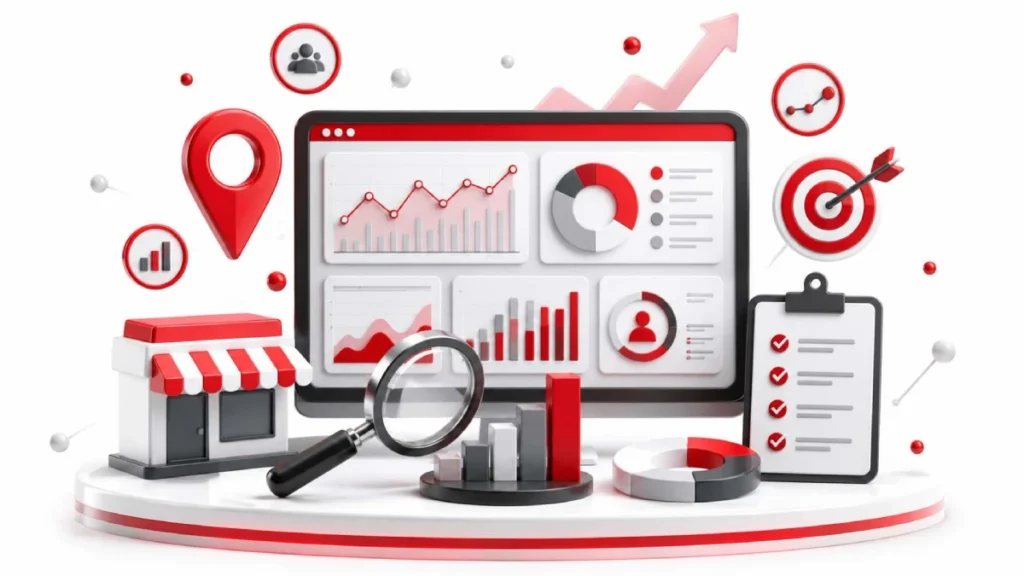
Visibility KPIs show how often you appear in local search results across a wider area. The main ones are Local Pack rankings, Share of Local Voice (SoLV), and Geo-Grid tracking. A SoLV of 60% or higher usually signals strong local visibility.
Google Business Profile KPIs
GBP KPIs track how people interact with your listing on Search and Maps. Key ones include profile views, website clicks, calls, and direction requests. The U.S. average GBP engagement rate is 4.2%, while optimized profiles hit 6.5%, per BrightLocal.
Website and Traffic KPIs
Website KPIs measure how local visitors behave after landing on your site. Track organic traffic, landing page engagement, bounce rate, and mobile speed. Split traffic into branded and non-branded to see if new customers are finding you.
Conversion KPIs (Online and Offline)
Conversion KPIs show how many visitors take real actions. Online ones include form fills, bookings, and click-to-call clicks. Offline ones include direction requests and store visits, which act as foot traffic proxies.
Reputation KPIs
Reputation KPIs measure how customers see your business through reviews and ratings. Track review count, star rating, velocity, and response rate. Profiles with 50+ reviews earn 4.4x more clicks than those with fewer than 5, per Whitespark.
Authority and Trust KPIs
Authority KPIs measure trust signals like citations and backlinks. Watch NAP consistency, citation count, and local backlink quality from sources like chambers of commerce. NAP errors on 3+ sources exclude businesses from Google AI Mode 74% of the time, per Moz.
Which KPIs Matter Most for Your Business Type
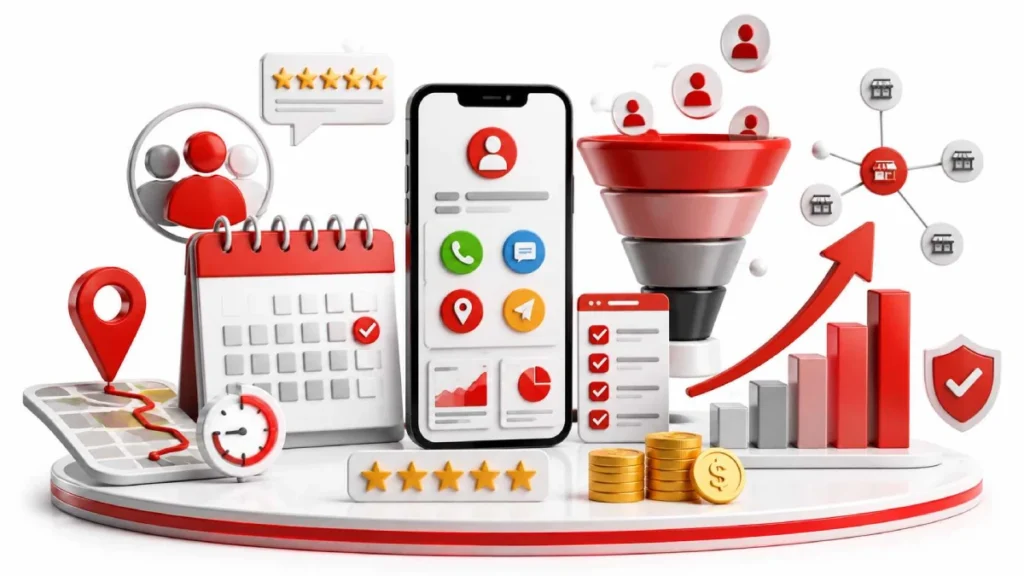
The KPIs that matter most depend on how your business serves customers, whether from a storefront, a service area, or many locations. Brick-and-mortar shops like cafés, retail stores, and dental clinics should focus on Map Pack rankings, direction requests, photo views, and review velocity. Service area businesses like plumbers, electricians, and landscapers need geo-grid scans, click-to-call actions, and city-specific landing page conversions.
Multi-location brands like franchises, regional clinics, and retail chains should track branch-level performance, UTM-tagged conversions, and citation consistency. According to Moz, consistent listings rank 2.4 positions higher on average. So pick the KPIs that match your revenue path, then ignore the rest.
Tools to Track Local SEO KPIs (Free and Paid)
You can track local SEO KPIs using a mix of free tools like Google Business Profile Insights, Google Analytics 4, and Google Search Console, along with paid platforms like BrightLocal, Local Falcon, and Semrush Local. The free tools cover the basics, while paid ones add geo-grid tracking, citation audits, and review management.
Start with the free stack. GBP Insights shows calls, clicks, and direction requests. GA4 tracks website conversions, and Search Console reveals which local keywords drive impressions. For deeper tracking, tools like Local Falcon and BrightLocal handle geo-grid heatmaps and SoLV scoring. BrightLocal starts at $39 per month and covers most small business needs.
How to Build a Simple Local SEO Dashboard and Reporting Rhythm
To build a simple local SEO dashboard, pull data from GBP, GA4, and Search Console into one view. Use Looker Studio or Google Sheets. Group your metrics into four sections: visibility, GBP actions, website performance, and reviews. Keep it to 5 to 7 KPIs so the dashboard stays clean.
Set a reporting rhythm to match. Check reviews and calls weekly, traffic and conversions monthly, and SoLV and revenue quarterly. This rhythm helps you spot small issues before they turn into big drops. According to Whitespark, businesses adding one review per week gain a 1.7 position ranking advantage over slower competitors.
What “Good” Looks Like: Benchmarks and How to Know Your Local SEO Is Working
It also shows 1,000 to 2,500 monthly profile views and steady growth in calls, direction requests, and reviews. Optimized profiles push engagement past 6.5%, per BrightLocal. Businesses with 100+ reviews see 31% year-over-year lead growth, well above the 12.4% average.
Your local SEO is working when the numbers trend up together, not just one at a time. Watch for more calls from GBP, more direction requests, and non-branded traffic rising month over month. According to a local marketing survey, businesses earn about $13 for every $1 spent on local SEO. So if your leads and revenue keep climbing, your local seo kpis are doing their job.
Common Mistakes When Tracking Local SEO KPIs
The biggest mistakes include tracking rankings from one spot, chasing vanity metrics, and skipping UTM tags on Google Business Profile links. These small errors hide the real value of your local seo kpis and break attribution in GA4.
Common tracking mistakes to avoid:
- Single-point rank tracking: Ignores how rankings shift by location.
- No UTM tags on GBP links: GBP clicks get mixed into Organic or Direct traffic.
- Chasing impressions and profile views: These numbers rarely tie to revenue.
- Ignoring review velocity: Old reviews signal a stale profile to Google.
- Treating GBP and website SEO separately: Both feed the same ranking system.
- Reacting to daily rank swings: Local results shift 2 to 3 spots naturally.
- Skipping mobile performance checks: Most local searches happen on phones.
- Forgetting holiday hours: Wrong hours lead to bad reviews and lost trust.
- Ignoring NAP consistency: Errors on 3+ sources exclude you from Google AI Mode 74% of the time, per Moz.
FAQs
What is a KPI in local SEO?
A KPI in local SEO is a number that shows how well your local search efforts bring in real customers. Examples include GBP calls, direction requests, form fills, and Local Pack rankings.
What is a good Share of Local Voice score?
A Share of Local Voice score of 60% or higher signals strong local visibility. Competitive markets like restaurants in big cities often need 70% or more.
How do I track local SEO in Google Analytics 4?
Track local SEO in GA4 by adding UTM tags to your Google Business Profile links. Then set up conversion events for form fills, calls, and bookings to see real attribution.
How many local SEO KPIs should I track?
Track 5 to 7 local SEO KPIs to keep your dashboard focused. Pick two or three from each core group, like visibility, GBP actions, and conversions.
Are keyword rankings still an important KPI in 2026?
Yes, but only when tracked across a geo-grid, not from a single spot. Pair rankings with Share of Local Voice and GBP actions for an accurate view.
Conclusion
Local SEO KPIs are the numbers that connect your search visibility to real business growth. Focus on business metrics like calls, direction requests, and bookings instead of vanity numbers like impressions or profile views.
AI Overviews now appear on 68% of local searches, so reviews, citations, and Share of Local Voice matter more than raw rankings. Pick 5 to 7 KPIs, match them to your business type, and review them on a weekly, monthly, and quarterly rhythm.
Start today by auditing your Google Business Profile, adding UTM tags to your links, and building a simple dashboard to track your local seo kpis.
10 August 2026
How to Track Local SEO Performance (Complete Guide)
10 August 2026