

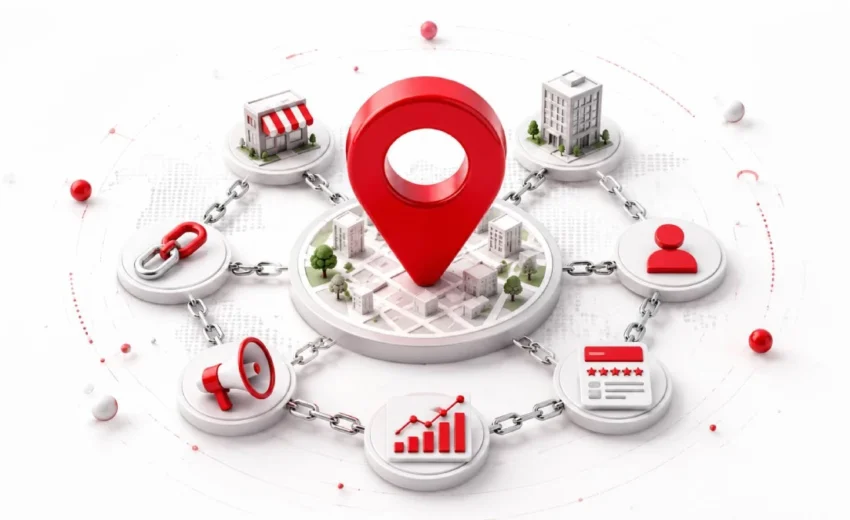
Local link building is one of the most overlooked growth strategies for small businesses in 2025. Most business owners think it is hard or expensive. It is neither — if you know where to start.
Not all links are equal. A DA 25 local council page often beats a DA 80 national blog for local rankings. Geographic relevance matters more than raw domain strength. Most businesses miss this entirely.
This guide explores foundational links, community outreach, digital PR, and advanced strategies. You will find real numbers, proven strategies, and a clear month-by-month action plan you can start today.
Key Points:
- Local links beat authority links. Geographic relevance matters more than domain rating.
- Citations and backlinks are not the same. Only backlinks pass actual ranking power.
- Build links in tiers. Start with directories, then community links, then content, then PR.
- Target relevance over DR. A local DA 25 site beats a national DA 70 site for local rankings.
- Warm outreach wins. Building relationships first converts at 25 to 30% vs 1 to 2% for cold emails.
- Results take time. Most businesses notice ranking changes within 3 to 6 months.
What Is Local Link Building?
Local link building means earning backlinks from area-based websites to your own site. These links come from local sources. Think town directories, regional newspapers, community blogs, and nearby business websites.
Each link tells Google your business is real and trusted in that location. Local backlinks are among the strongest ranking factors for showing up in your city.
Local Link Building vs. Traditional Link Building
Traditional link building chases authority. Local link building chases geographic relevance. A link from a DA 25 local council page often beats a DA 80 national tech blog for local rankings. Location context matters more than raw domain strength.
Why Local Link Building Matters in 2025
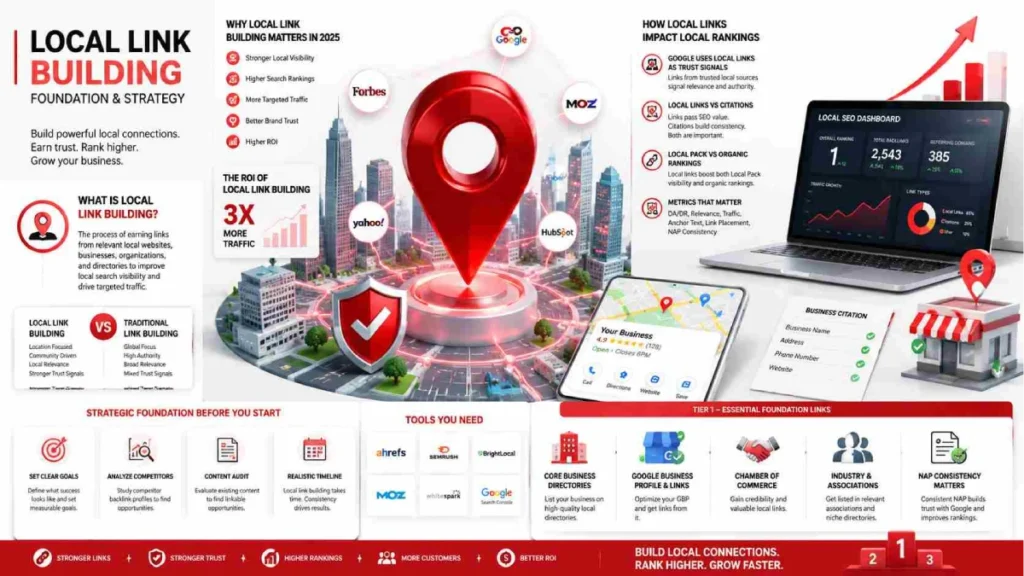
Local link building matters in 2025 because Google now checks where your links come from, not just how many you have. A link from a local news site, a city directory, or a nearby business partner carries real geographic weight. That weight affects your rankings in local search results.
Marketing agencies now spend 32.1% of their entire search budget on link acquisition, according to a 2026 Editorial.Link survey of 518 professionals.
The ROI of Local Link Building
Local link building delivers strong returns because local searches come from buyers, not browsers. A person searching “emergency plumber in Leeds” or “dentist near me open Saturday” is ready to make a call.
One local business secured 4 to 7 backlinks monthly from regional sites. It saw a 105% year-over-year traffic increase. Another grew monthly sessions from 15,430 to 55,210 — a 258.5% increase in just 12 months.
How Local Links Impact Local Rankings
Local links tell Google your business is trusted within a specific area. Links from nearby authoritative sources like newspapers and directories act as geographic validation signals. Google reads these to decide how much local visibility to give your business.
How Google Uses Local Links to Measure Trust Signals
Google treats local links as location-tied endorsements. When a town council portal, a local charity, or a neighborhood blog links to you, Google connects your business to that area. Stronger trust in a local source results in a more powerful signal.
Local Links vs. Citations — Key Difference
A citation is an online mention of your business name, address, and phone number (NAP). A local link carries genuine ranking authority.
Citations on directories like Yelp, Yellow Pages, and TripAdvisor confirm you exist. But by themselves, they do not improve rankings. Since 2018, Google has placed more weight on manual local backlinks. These require real relationships to earn.
Local Pack vs. Organic Rankings
The Local Pack is driven by your Google Business Profile and reviews. In competitive markets, local backlinks become the deciding factor between similar listings.
Metrics That Matter for Ranking Locally
Geographic relevance of the linking domain matters more than its Domain Rating. A DA 25 Manchester community blog beats a DA 70 national site for a Manchester business.
Focus on these metrics:
- Geographic relevance: Does the site serve your target city?
- Topical proximity: Is it in a related industry?
- Regional traffic: Do local users visit it?
- Anchor text balance: 70% branded, 20% location-based, 10% exact-match
For most small businesses, DR 20 to 40 is enough to rank well locally.
Strategic Foundation Before You Start
Before you build a single link, get your plan ready. Rushing into outreach without a foundation wastes time and money. Start with clear goals, competitor research, and a quick site audit.
Setting Clear Local Link Building Goals
Set clear goals based on real results rather than just the number of links
- Target a ranking position, like “top 3 for plumber in Bristol”
- Set a timeline — 3 to 6 months is realistic for most markets
- Tie goals to business results like calls, leads, or bookings
Analyzing Your Local Competitors’ Link Profiles
Check where your top 3 local competitors get their links first.
- Use Ahrefs or Semrush to run a backlink gap analysis
- Find sites linking to rivals like local directories and regional blogs
- Those unlinked sites become your first outreach targets
Conducting a Content Audit Before Outreach
Make sure your site is worth linking to before you pitch anyone.
- Each location page needs at least 300 words of unique content
- Add local schema markup and a clear service area
- Fix broken pages so no incoming link goes to a 404 error
Realistic Timeline for Results
Most campaigns take 3 to 6 months to show clear ranking movement.
- Month 1: Fix citations, clean NAP, secure core directories
- Months 2 to 3: Build local resource pages and linkable assets
- Months 4 to 6: Launch outreach, pitch local media
- Month 6 onward: Track rankings and scale what works
Competitive cities like London or Manchester may need up to 12 months.
Tools You Need for Local Link Building
You need 4 to 5 core tools to run a proper local link building campaign. Each one covers a different job. Together they handle prospecting, outreach, tracking, and auditing.
- Ahrefs — competitor backlink analysis and link gap reports, from $129/month
- Semrush — backlink audits and brand mention tracking, from $139/month
- BrightLocal — Local Pack tracking and citation audits, from $39/month
- Whitespark — local rank tracker and citation monitoring, from $20/month
- Hunter.io — finds editor and webmaster emails, free tier available
- Screaming Frog — crawls sites to find broken links, free up to 500 URLs
- Google Search Console — shows who links to your site, completely free
Most small businesses can start with Google Search Console, BrightLocal, and Ahrefs for under $170 per month. Add Hunter.io and Screaming Frog when you are ready to scale outreach.
Tier 1 — Essential Foundation Links
Foundation links are the first links every local business should build. They are easy to get, fully controllable, and build basic trust with Google. Start here before any outreach.
Core Business Directory Listings
Claim your listings on core directories first. These include Google Business Profile, Yelp, Bing Places, Apple Maps, and BBB. Use the exact same business name, address, and phone number on each one. Also target industry-specific directories like Houzz for contractors or Healthgrades for clinics.
Google Business Profile and Local Links
Your Google Business Profile is your most valuable local SEO asset. Connect it to your best-optimized local landing page and define service areas using cities and postcodes.For service area businesses like plumbers or mobile cleaners, hide your physical address to stay compliant with Google’s guidelines.
Chamber of Commerce Membership Links
A Chamber of Commerce link is one of the most trusted local backlinks you can get. Most chamber directories carry a DA between 35 and 55. Membership costs £200 to £600 per year. That makes it one of the most cost-effective links available.
Industry and Professional Association Listings
Get listed in associations tied to your trade. Think builder federations, regional bar associations, or local health networks. These links prove to Google your business operates in its claimed industry. They also add topical relevance that generic directories cannot provide.
NAP Consistency and Why It Matters
Your business name, address, and phone number must be identical across all platforms . Even small differences like “Ste 100” vs “Suite 100” can weaken your local rankings. Consistent NAP profiles improve local search positioning.Improving NAP consistency lifts local rankings by 28% on average
Tier 2 — Community-Focused Link Building
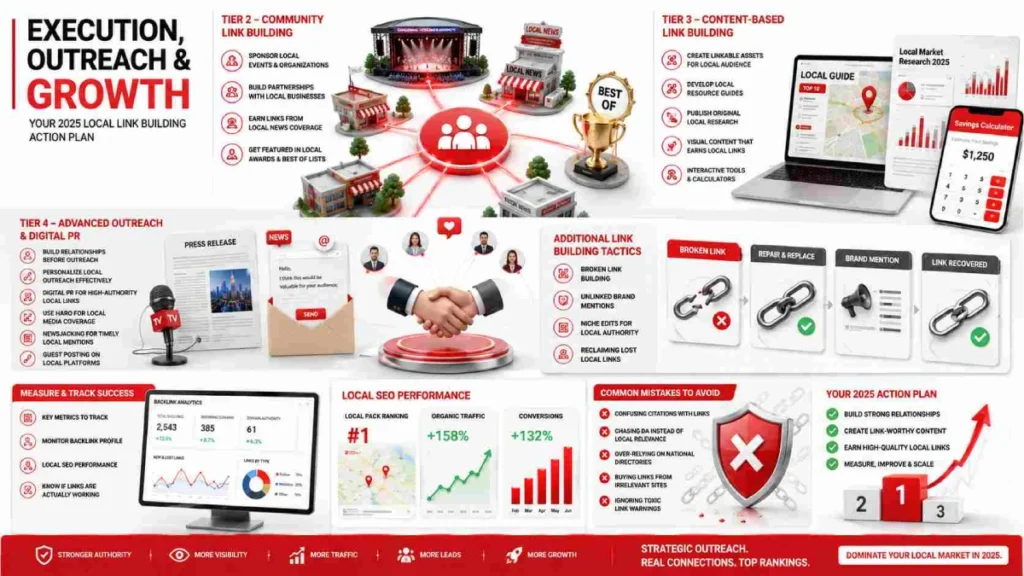
Community links come from being active in your local area. They take more effort than directory listings but carry far more weight. These are links competitors cannot copy overnight.
Sponsoring Local Events and Organizations
Sponsor local events like charity runs, youth sports teams, or school fundraisers. Most sponsorships cost between £100 and £500 and get your website listed on the organization’s sponsors page.
Use these search operators to find opportunities:
- “[City Name]” + “sponsors”
- “[City Name]” + “youth sports league” + “supporters”
- site:.org “[City Name]” + “fundraiser sponsors”
Building Partnerships with Local Businesses
Partner with non-competing businesses that serve the same local customers. A plumber and an HVAC contractor, a wedding photographer and a florist, or a gym and a nutritionist all share audiences without competing. Co-author a local guide or list each other as preferred providers on your websites.
Earning Links from Local News Coverage
Local news sites are among the most authoritative sources of geographic backlinks. Send a press release when something newsworthy happens. This could be a business expansion, a community donation, or a local award win. Target regional outlets like city newspapers, local blogs, and community news portals.
Getting Featured in Local Awards and Best Of Lists
Getting listed on roundups like “Top Dentists in Leeds” or “Best Cafes in Bristol” earns strong local backlinks. These lists also influence AI search recommendations. AI tools rely on expert-compiled regional rankings. Search for award pages in your industry and submit your business with verified reviews and clear credentials.
Tier 3 — Content-Based Link Building
Content-based links come from creating something useful that local sites want to reference. This is how you earn links without cold outreach. Good local content gets shared, cited, and linked to over time.
Creating Linkable Assets for a Local Audience
A linkable asset is a page so useful that other local sites link to it without being asked. It uses local landmarks, regional data, and area-specific details that national content never covers. Think a home maintenance guide for Manchester’s weather or a compliance checklist for Leeds property renovators.
Developing Local Resource Guides
Local resource guides attract links from community portals, local blogs, and regional directories. Topics that work well include pet-friendly parks in a specific borough, a new resident guide for your city, or seasonal home maintenance tips for your region. The more local the topic, the more relevant the links you earn.
Publishing Original Local Research and Data
Original local data earns links because journalists and bloggers need statistics. Run a local survey, analyze regional market trends, or compile area-specific benchmarks. Publish them as a dedicated stats page. When writers search for local data, they find and cite your page as the source.
Visual Content That Earns Local Links
Infographics and visual maps earn more backlinks than plain text pages. A visual showing energy costs across neighborhoods, crime trends by postcode, or house price changes over 10 years gives local forums and news sites something shareable. One well-designed local infographic can earn links for months without outreach.
Interactive Tools and Calculators
Interactive tools earn consistent links because they solve a real problem. A local accounting firm could build a regional tax calculator. A moving company could create a distance-cost estimator for local relocations. These tools attract links from real estate agents, local bloggers, and community platforms.
Tier 4 — Advanced Outreach and Digital PR
Advanced outreach means building relationships with local media and journalists. This tier takes the most effort but produces the highest-authority links. One editorial link from a regional news site can move rankings faster than 20 directory listings.
Building Relationships Before Outreach Begins
Never send a cold pitch to someone who has never heard of you. Engage with local editors and bloggers on social media first. Share their content and build familiarity before making an ask. Warm outreach converts at 25 to 30%. Cold templates average just 1 to 2%.
How to Personalize Local Outreach
Every outreach email must reference something specific from the recipient’s own site. Mention a recent article, identify a content gap, and explain how your resource helps their local readers. Generic templates get ignored. Specific pitches get replies.
Digital PR for High-Authority Local Links
Digital PR means pitching a newsworthy story to regional journalists and media outlets. Package unique local data, a charitable event, or expert commentary into a short media kit. A single editorial link from a regional newspaper passes more trust than dozens of directory links.
Using HARO for Local Media Coverage
HARO relaunched in April 2025 under Featured.com after shutting down in December 2024. Do not rely on one platform. Use Featured.com, Qwoted, Source of Sources, SourceBottle, and Help a B2B Writer to cover different niches.
46% of Google searches have local intent
Newsjacking means reacting to a breaking local story with expert commentary.In the event of a winter storm in your area, a structural contractor can offer safety tips to local media within hours.The faster you respond with a relevant angle, the more likely a journalist links to your site.
Guest Posting on Local Platforms
Guest posting means writing articles for established regional blogs, city magazines, and community news sites. Target publications your actual customers read, not just any site that accepts guest content. One well-placed article on a respected local platform earns a contextual backlink and puts your brand in front of a ready local audience.
Additional Link Building Tactics
These tactics help you find link opportunities that already exist but are not being used. They convert at a higher rate than cold outreach. Add these to your monthly workflow once your foundation is in place.
Broken Link Building for Local SEO
Broken link building involves identifying dead links on local websites and suggesting your content as a replacement. Use Screaming Frog or Ahrefs to scan local resource pages and regional blogs for 404 errors. You are helping the webmaster fix a real problem. That makes your pitch far warmer than a cold email.
Unlinked Brand Mentions as Easy Wins
An unlinked mention is when a local site writes about your business but does not link to your website. Find them using this Google search: intext:”Your Business Name” -site:yourdomain.com. Since the writer already knows your brand, a polite email asking for a link converts at one of the highest rates in local link building.
Niche Edits for Local Authority
A niche edit places your link inside an existing, indexed article on a relevant local site. Unlike guest posts, you skip the waiting period for new content to get crawled. The link sits inside aged content that already has traffic. It passes equity and referral visitors faster.
Reclaiming Lost Local Links
Lost links are backlinks that once pointed to your site but now lead to a 404 error. Use Ahrefs or Google Search Console to find them. Then contact the webmaster with the correct updated URL. They linked to you before, so they are far more likely to restore the link than a cold prospect.
How to Measure Local Link Building Success
You measure local link building success by tracking ranking changes, referral traffic, and lead growth together. Looking at link counts alone tells you very little. What matters is whether those links are moving your business up in local search results.
Key Metrics to Track
Track referring domains, local keyword rankings, Local Pack positions, referral traffic, and conversions every month. Do not just count links. Focus on whether rankings for searches like “plumber in Leeds” or “dentist in Bristol” are moving up.
How to Monitor Your Local Backlink Profile
Run a backlink audit every month using Ahrefs, Semrush, or Google Search Console. Check for new links, lost links, and any suspicious domains pointing to your site. Catching a lost link early gives you time to recover it before rankings drop.
How to Know If Local Links Are Working
The clearest sign local links are working is a consistent upward move in your target keyword rankings. Expect crawler indexation within 15 days of a link going live. Local organic movement follows within 30 to 45 days. Map Pack improvements appear between day 60 and day 90.
Common Mistakes to Avoid
Most local link building failures come from the same handful of mistakes. Avoiding them saves time, budget, and protects your rankings from penalties.
- Confusing citations with links — citations list your details, backlinks pass ranking power. They are not the same thing.
- Chasing DA over local relevance — a DA 25 local council page beats a DA 70 unrelated national blog for local rankings.
- Over-relying on national directories — generic listings give Google a weak local signal and won’t move rankings alone.
- Buying links from irrelevant sites — link farms and PBNs violate Google’s guidelines and risk manual penalties.
- Ignoring toxic link warnings — audit your backlink profile monthly and disavow spammy domains before they cause damage.
Your 2025 Local Link Building Action Plan
Start with your foundation in month 1. Fix citations, clean NAP consistency, and claim core directories like Google Business Profile, Bing Places, and BBB.
In months 2 to 3, build 2 to 3 linkable assets like local resource guides or data pages.
From month 4 onward, launch outreach, pitch local media, and aim for 3 to 5 quality backlinks per month.
Most small businesses see clear ranking movement within 3 to 6 months of consistent effort. In months 7 to 12, focus on partnerships, guest posts, and scaling what is working. Competitive cities like London or Manchester may take closer to 12 months for top positions.
FAQs
What is local link building?
Local link building means earning backlinks from geographically relevant sites like local directories, regional news outlets, and community blogs. These links tell Google your business is trusted within a specific location.
How is local link building different from regular link building?
Regular link building chases domain authority. Local link building prioritizes geographic relevance. Where a link comes from matters more than how strong the domain looks.
How much time does local link building take to deliver results?
Most campaigns show ranking movement within 3 to 6 months. Map Pack improvements appear between day 60 and day 90 after a link goes live.
How many local links are needed to achieve rankings?
Aim for 3 to 5 quality local backlinks per month as a starting target. Relevance and location context matter far more than total link count.
What happens if I only build citations and skip link building?
Citations alone will not move rankings in competitive markets. Competitors earning local backlinks will outrank businesses relying only on directory submissions.
What is the best free tool for local link building?
Google Search Console is the best free starting point. It shows every site linking to you. Pair it with Screaming Frog, free up to 500 URLs, to find broken link opportunities.
What is a realistic local link building budget?
A basic tool setup costs $170 to $200 per month using Google Search Console, BrightLocal, and Ahrefs. Link acquisition costs range from £1.50 for a directory listing to £800 or more per month for digital PR.
Conclusion
Local link building is one of the most direct ways to improve your visibility in local search results. Google treats geographically relevant links as trust signals. Those signals affect your Local Pack and organic rankings.
Start with foundation links. Build community relationships. Create local content. Then move into digital PR.
Most businesses see meaningful movement within 3 to 6 months of consistent effort. The businesses that win locally are not the ones with the most links. They are the ones with the most relevant, relationship-driven links built over time.
Ready to start building local links? Audit your backlinks in Google Search Console, identify your top 3 local competitors, and find your first 10 outreach targets this week.
10 July 2026
H1 and Heading Tags for Local SEO: Best...
10 July 2026