

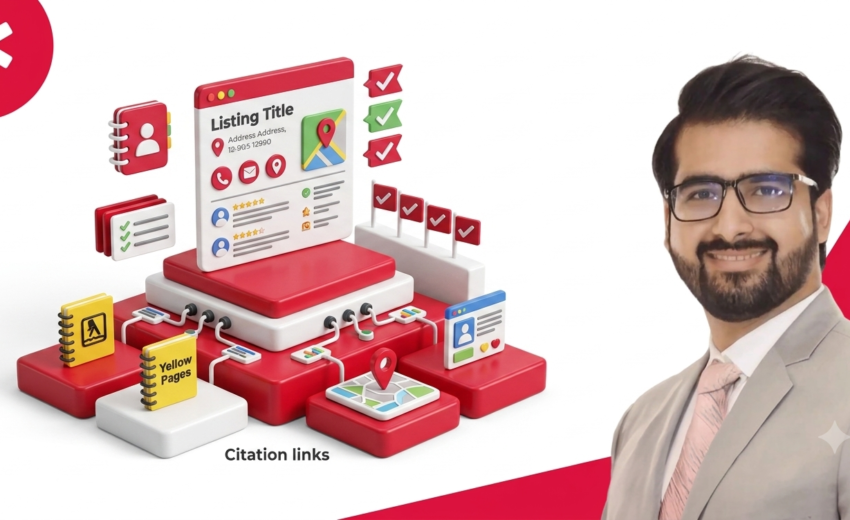
Imagine losing a customer because your phone number is wrong on Yelp. It happens every day. Utilizing strategic local citations SEO prevents this invisible drain on your revenue. A potential customer searches for a business like yours. Google scans dozens of platforms to decide who to show. Your address in one directory does not match another.
Your outdated phone number hurts your business. Half your listings were never claimed. Google does not trust unreliable data. It shows your competitor instead. You never even knew you had a chance.
This guide fixes that. You will learn what local citations are, how NAP consistency affects your rankings, and where citations come from. implement local citations seo strategies, audit your profiles, and clean up what is already out there.
What is a Local Citation?
A local citation is any online mention of your business name, address, and phone number. It can appear on directories like Yelp or Yellow Pages. It can show up on Facebook or inside a local news article.
Google uses these mentions to confirm your business is real. It checks that you are active and located where you say you are. Google cannot visit your storefront. So it reads the web instead. It looks for consistent signals that prove your business exists at a specific address.
What is NAP in local SEO
NAP stands for name, address, and phone number. These three details are the core of every citation. When the same NAP appears across 50 to 80 trusted sources, Google’s confidence grows. That confidence directly influences where you appear in local search results.
A complete citation goes beyond NAP. It includes your website URL, business hours, and categories like “Emergency Plumber” or “Family Dentist.” It can also include photos. Each extra field gives Google more to cross-reference. That gives Google more reason to trust your listing over a competitor’s.
The Benefits of Local Citations
The benefits of local citations are direct and measurable. Before building your local citations directory presence, it helps to understand what you are working toward.
- Google local citations confirm your business is real and operating at a specific location, increasing Google’s confidence in your NAP data.
- They push you into the local map pack for category searches and create location signals that help you appear in near me searches
- They act as trust signals that AI tools like Google’s AI Overview use when surfacing local business answers
- A consistent local citations seo profile makes your business look more legitimate than competitors who only exist on Google.
In short, citations for local seo are the foundation Google builds its trust in your business on. Without them, even a perfectly optimized website struggles to compete in local search.
The Two Types of Local Citations
Local search citations come in two forms. Understanding the difference helps you build a stronger citation profile than most competitors.
Structured CitationsLocal search citations come in two forms.
Understanding the difference helps you build a stronger local citations seo blueprint than most competitors.
A structured citation is a formal business listing on a local citations directory. Your information sits in predefined fields. There is a box for your name, your address, and your phone number. This fixed format makes it easy for search engines to read your data accurately.
These are the citations most business owners think of first. Platforms like Yelp, Yellow Pages, Bing Places, and Foursquare organize and display local business citations. When you create a profile on any of these, you give search engines a verified set of facts about your business.
Unstructured Citations
An unstructured citation is a mention of your business inside natural text. It is not inside a directory form. A local news site covering a new restaurant is one example. A community blog listing businesses near a park is another. A regional events page mentioning your shop by name and address is another.
You have to earn these citations. You get them through local press coverage, community involvement, or outreach to local bloggers. Most businesses ignore them. That is a mistake.
Search engines treat unstructured citations as endorsements. A mention in a trusted local news article tells Google something a Yelp listing cannot. It tells Google that an independent source considers your business worth talking about. In 2025 and 2026, these mentions are becoming more valuable. AI models use them to understand your business reputation beyond raw directory data.
Why Local Citations Matter for Your Search Rankings
Local citations SEO gives Google the evidence it needs to trust your business. They help Google show your business to the right people at the right time. Google ranks local businesses on three factors: relevance, proximity, and prominence. Citations for local business influence all three.
When Google finds your NAP on Yelp, it cross-references that data against your Google Business Profile and industry directories like Healthgrades and local sites like your Chamber of Commerce. Consistent matches increase Google’s confidence. That confidence pushes you into the local map pack.
Google local citations also act as location signals. If 60 citations point to the same address, Google has strong evidence that your business is the most relevant result for searchers in that area. This includes the growing volume of near me searches.
Do citations still matter in 2025 and 2026? Yes. But their role has shifted. Volume alone no longer produces a ranking boost. Citations now work as a trust layer. Google rewards consistency and accuracy across the right platforms.
This matters even more in an AI-first search environment. When Google’s AI Overview surfaces local business answers, it draws from citation data across the web. A business with clean, consistent citations is far more likely to appear in those answers.
NAP consistency — the rule that makes or breaks your citations
NAP consistency means your Name, Address, and Phone number look identical across every platform. Not similar. Identical. To a human, “Main Street Plumbing” and “Main St. Plumbing LLC” look the same. To a search engine, they are two different entities. Search engines use precise string matching. When Google finds conflicting information, it does not pick the correct version. It loses confidence in your data entirely.
Small differences cause big problems. Say 30 citations use “St.” and 30 use “Street.” Google splits the authority of those 60 mentions into two weaker groups. Instead of one strong signal, you get two weak ones. Even the difference between http and https can register as a mismatch.
The most common causes are business moves, rebrands, and auto-generated listings. Many directories scrape data from public records. They create listings you never submitted. That data may be years out of date.
The ranking impact is specific. Inconsistent NAP rarely stops you ranking for your own business name. What it does is create a ceiling. You stall on category searches like “emergency plumber Chicago” or “best dentist near me.” Businesses with clean citations break through. Businesses with inconsistent data do not.
Before building a single new citation, decide on your canonical NAP. This is the exact master version of your name, address, and phone number. Write it down. Use it everywhere. Never vary it.
Where Local Citations Come From
Not all citation sources carry the same weight. Knowing which ones to prioritize saves you time and produces better results.
General Directories
General directories are the foundation of any citation profile. Search engines trust platforms like Yelp, Yellow Pages, Foursquare, and the Better Business Bureau. Most businesses already have auto-generated listings on these platforms. Claiming and completing them matters more than creating new ones.
Search Engine Platforms
These are your highest priority sources. Google Business Profile, Bing Places, and Apple Business Connect are more than directories. They are the primary way people discover and navigate to local businesses. Fix these first before changing anything else.
Social Media Profiles
Facebook and LinkedIn are local business citation sources most businesses overlook. A Facebook Business Page with a matching name, address, and phone number is a trust signal. Search engines use it to confirm your business is active and legitimate. These are not vanity listings. They are data points Google cross-references against your other citations.
Niche and Industry Directories
General directories alone are rarely enough in competitive markets. Your business recognition in its industry shows through niche directories to Google. A lawyer on Avvo or FindLaw carries more weight than a generic city listing. So does a contractor on Houzz or Angi, a doctor on Healthgrades or ZocDoc, and a hotel on TripAdvisor.
Local and Community Sources
Local sources provide geographic relevance that national directories cannot match. A listing on your Chamber of Commerce website tells Google your business is present in a specific location. So does a mention in a neighborhood blog or a local news site. These are often unstructured citations and they carry real SEO value.
Data Aggregators
Data aggregators are the most important and least visible part of the citation ecosystem. Companies like Data Axle, Neustar Localeze, and Foursquare collect business data. They distribute it across hundreds of smaller directories, navigation apps, and search engines. An aggregator, not you, populated most obscure directory listings.
Submitting your correct data directly to aggregators is one of the highest-leverage actions you can take. One accurate submission can correct dozens of downstream listings. One piece of bad data can spread just as fast.
How to Build Local Citations Step by Step
Building citations is not about volume. It is about placing accurate data on the right platforms in the right order. Before submitting anywhere, decide on the exact version of your business name, address, and phone number. Write it down. Use it everywhere without variation. This is your canonical NAP.
Follow this order. Claim and verify Google Business Profile first. Then move to Bing Places and Apple Business Connect. Then submit to major directories like Yelp, Yellow Pages, and the Better Business Bureau. Then submit to data aggregators like Data Axle, Neustar Localeze, and Foursquare. Finally add niche and local directories relevant to your industry.
Build at a steady pace. Submitting 200 citations in one week looks unnatural. Always verify whether a listing already exists before creating a new one. Duplicates are one of the most common causes of ranking instability.
Starting From Zero — What New Businesses Should Do First
Start with your website. Put your canonical NAP in the footer and on your contact page. Do this before building anywhere else. It gives search engines an owned reference point to validate everything they find about you.
Then claim your Google Business Profile. Wait for full verification before moving to other platforms. Expect 8 to 12 weeks before seeing movement in local map rankings.
How to Maintain Updated Local Citations for Business Locations
Set a quarterly reminder to run a local citation scan across your main directories. Check that your hours, address, and phone number are still accurate on every platform. When anything changes a phone number, a new address, updated hours update your canonical NAP first, then work through your local citation list in the same priority order you used to build them.
For businesses with more than three or four locations, use a centralized local citation management tool. It applies name changes, phone updates, and holiday hours across every location at once without visiting each directory manually.
How to Audit and Fix your Existing Citations
A citation audit is a check of every place your business appears online. You are looking for wrong information, duplicate listings, and missing platforms. If you have never done one, incorrect data may be working against your rankings right now.
Step 1: Establish your canonical NAP. Confirm the exact version of your business name, address, and phone number. This becomes your benchmark. Everything that does not match needs fixing.
Step 2: Find every listing. Search Google for your business name and phone number. Then search for any old phone numbers or previous addresses. Tools like BrightLocal’s Citation Tracker and Whitespark’s Citation Finder surface listings you would never find manually.
Step 3: Document what you find. Create a simple spreadsheet. Add columns for the platform name, the NAP data found, what is wrong, and the fix status. This keeps the process manageable.
Step 4: Fix inconsistencies. Log into every directory you control. Update the data to match your canonical NAP exactly. For platforms you do not control, use the claim button or contact support.
Step 5: Deal with duplicates. If two listings exist for your business on the same platform, ask the directory to merge or suppress the duplicate. Never leave duplicates unresolved. Google may choose to show neither listing.
Step 6: Update after a move or rebrand. Update your citations before changing your Google Business Profile. Changing GBP first creates conflicting signals. That can suppress your rankings for weeks.
Step 7: Run a citation gap analysis. Look at what your top three competitors have that you do not. If they list on a platform you are missing, close that gap. Whitespark makes this straightforward by comparing your profile directly against competitors.
How Schema Markup Supports your Local Citations
Schema markup is code you add to your website that tells search engines what your business information is in a language they understand perfectly. I. A citation on Yelp is a third-party mention. Schema is different. It is an owned signal that lives on your own website and speaks directly to search engines.
When Google crawls your site and finds your data inside LocalBusiness schema, its confidence grows. It then finds that same data on Yelp and Bing Places. That match tells Google your business information is accurate and trustworthy. Schema does not replace citations. It reinforces them.
The essential fields to include are your business name, full address, phone number, operating hours, and geo-coordinates. These five fields give search engines everything they need to place your business accurately in local results.
Most local competitors are not using schema. Others have implemented it incorrectly. This makes it one of the clearest advantages available to small businesses right now.
Tools like Google’s Rich Results Test let you check whether your schema is valid. If you use WordPress, plugins like Rank Math or Yoast SEO generate LocalBusiness schema automatically. You do not need to touch any code.
The Best Tools for Building and Managing Local Citations
Local citation management across dozens of platforms takes significant time without the right tools. These make the process faster, more accurate, and easier to maintain.
BrightLocal
The best all-round option for small and medium businesses. It audits existing citations and builds new ones through their manual team. It also tracks your local map pack rankings all in one place.
Whitespark
The strongest tool for local citation finder and gap analysis. It finds the specific directories your competitors are using that you are not. It also surfaces niche and local platforms that generic tools miss. Use it to find local citations your profile is missing compared to top-ranking competitors.
Moz Local
Moz Local Best for NAP consistency monitoring across major directories and moz local data aggregators. It manages your presence across their partner network and sends real-time alerts if a third party changes your listing information.
The dashboard gives a clear view of which platforms have accepted your data and which still need attention. For businesses evaluating plans, the difference between legacy and essential tiers comes down to whether you need aggregator distribution included or just monitoring.
Semrush
The right choice for competitive research. Its Local SEO suite shows which directories are driving traffic to your competitors. It also shows where your citation profile falls short.
Yext
Worth considering if you need real-time data sync across a large network of directories. The tradeoff is cost. Some platforms revert to old data if the subscription lapses. For businesses without a budget, BrightLocal and Moz Local both offer free trials.
They surface your biggest citation errors at no cost. Fixing the top ten platforms manually costs nothing beyond your time. One location with a stable address is manageable on your own. Multiple locations, a recent move, or a rebrand makes a paid tool worth the investment.
Citation mistakes that quietly hurt your local rankings
Most citation problems create a slow, invisible drag on your rankings. There is no penalty or notification to warn you.
- Chasing volume before fixing consistency. Submitting to 100 new directories when existing listings have the wrong phone number is like pouring water into a leaky bucket. Fix what breaks first.
- Letting duplicate listings go unresolved. When two listings exist for the same business on the same platform, Google may show neither. Find them and get them merged or suppressed.
- Assuming Google Business Profile is all you need. Google still looks for third-party verification. A business appearing across dozens of independent sources looks more legitimate than one that only exists on Google.
- Building citations too fast. Submitting hundreds of listings in a short period looks unnatural. Build in stages and let each tier settle before moving forward.
- Using different business name formats. Switching between “ABC Plumbing,” “ABC Plumbing LLC,” and “ABC Plumbing Services” stops Google from connecting those mentions into one authoritative entity.
- Never going back to update. Hours shift, phone numbers change, and locations move. Citations untouched for years signal to Google that the business may be inactive. Treat your citation profile as a living asset, not a one-time task.
FAQs
How many local citations does my business actually need?
In most markets, 50 to 80 high-quality citations is a strong foundation. Match or slightly exceed what your top three competitors have.
Do citations help my business show up in near me searches?
Yes, Citations provide the address data search engines use to determine proximity. Consistent citations give Google the confidence to place you in near me results.
Do social media profiles qualify as local citations?
Yes, A Facebook Business Page or LinkedIn company page with your NAP counts as a citation. It acts as a trust signal Google cross-references against your other listings.
How long does it take for citations to improve my rankings?
Typically 8 to 12 weeks. Search engines need time to crawl, index, and reconcile new listing data before updating their understanding of your business.
Should I fix my existing citations before building new ones?
Yes, Building new listings on top of inaccurate data makes the problem worse. Clean up first, then build outward.
Can I build local citations myself or do I need to hire someone?
You can do it yourself for a single location with a stable address. Multiple locations, a recent move, or a competitive market makes a citation service or management tool worth the investment.
Conclusion:
Local citations are the foundation of local search visibility. They tell Google your business is real, trustworthy, and located where you say it is. Without clean, consistent local citations SEO, even a well-optimized website will struggle to compete in local search results.
Start with your canonical NAP. Claim your Google Business Profile first. Build outward through your local citation list in the right order. Run a local citation scan to review what already exists and fix what is broken. Treat your local citation management as a living process, not a one-time task.
Ready to take action? Search for your business name on Google right now. Check whether your name, address, and phone number are consistent across the first ten listings you find. That single local citation check will tell you exactly where you stand and what needs fixing first.
12 June 2026
Google Business Profile Insights: How to Read and...

12 June 2026